Fort Greene or Clinton Hill? Let the Address Decide
The neighboring districts share brownstone streets and cultural life, but park access, transit reach and commercial patterns shift across the boundary.
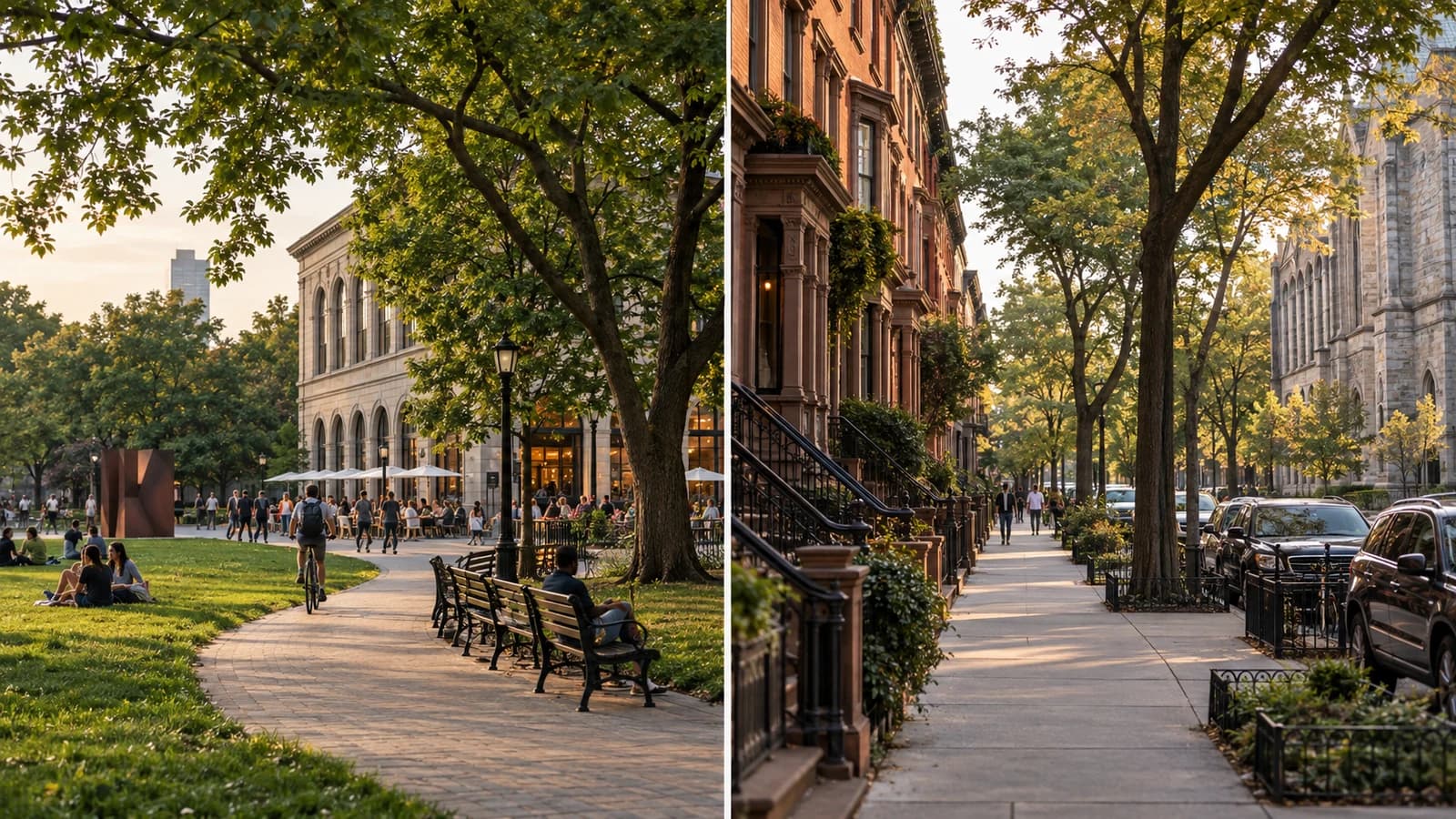
Fort Greene tends to put more addresses near its namesake park, major cultural destinations and the transit concentration toward Downtown Brooklyn; Clinton Hill extends the residential and institutional fabric eastward with a different block-by-block rhythm. They are neighbors, not opposites. Choose between actual addresses by measuring the trips and street conditions you will repeat.
Set the decision before the search
A Fort Greene address may make the park, cultural venues or Atlantic Terminal-area connections central to the week. A Clinton Hill address may orient more strongly to local bus routes, the G corridor, Pratt and the commercial streets crossing the neighborhood. Those are starting points, not guarantees: the western edge of Clinton Hill can be closer to Fort Greene destinations than parts of Fort Greene itself.
Use a written scorecard with the same categories for every address. Mark facts separately from impressions, and date anything that can change. A direct answer is useful only when the assumptions behind it are visible.
Verify the address, not the reputation
Both neighborhoods sit within Brooklyn Community District 2, which is useful for civic information but does not erase their identities. Check an address against current transit tools, landmark or building information where relevant and the services you need. If accessibility matters, verify station paths and elevators on the day of travel rather than assuming proximity equals access.
Keep links to the official pages you used and recheck them when you are ready to sign or move. Service changes, laws, fees, inventory and access conditions are mutable; this article was verified September 26, 2026.
Do the fieldwork
Walk from each listing to the most useful station, then to groceries and a second recurring destination. Cross the busiest avenue and repeat after work. Compare hills, sidewalk conditions, bike storage, delivery traffic and street-facing noise. Spend time on the residential block as well as the attractive destination that brought you there.
Write down actual door-to-door minutes and unresolved questions immediately. Memory tends to preserve the attractive kitchen or tree-lined block and discard the inconvenient transfer, stairs or missing errand.
Avoid the shortcut claims
Do not treat one neighborhood as automatically quieter, safer or less expensive. Those claims require defined, current data and can obscure variation within a few blocks. A historic brownstone exterior also says little about insulation, stairs, heat or maintenance. Current listing prices are evidence about today's available sample, not a permanent verdict.
Treat any superlative—best, safest, cheapest, easiest—as a prompt to ask who measured it, across what geography and when. The useful outcome is a defensible fit for one household, not a universal Brooklyn ranking.
Make the next move
If cultural access and a park-centered routine dominate, test Fort Greene first. If a more easterly residential location or a particular G/bus connection works better, test Clinton Hill first. Then reverse the order: a good comparison tries to disprove its initial preference before committing.
This page is part of The BK Brief's Living in Brooklyn series. It offers reporting and planning tools, not legal, financial or housing-placement advice. Use the linked agencies and service operators for current rules and individualized help.
Last verified September 26, 2026. Practical details can change; check linked official sources before making plans.