Windsor Terrace or Park Slope? Compare the Routine
Both border Prospect Park, but transit choices, commercial density, housing search and the pace of errands create different daily calculations.
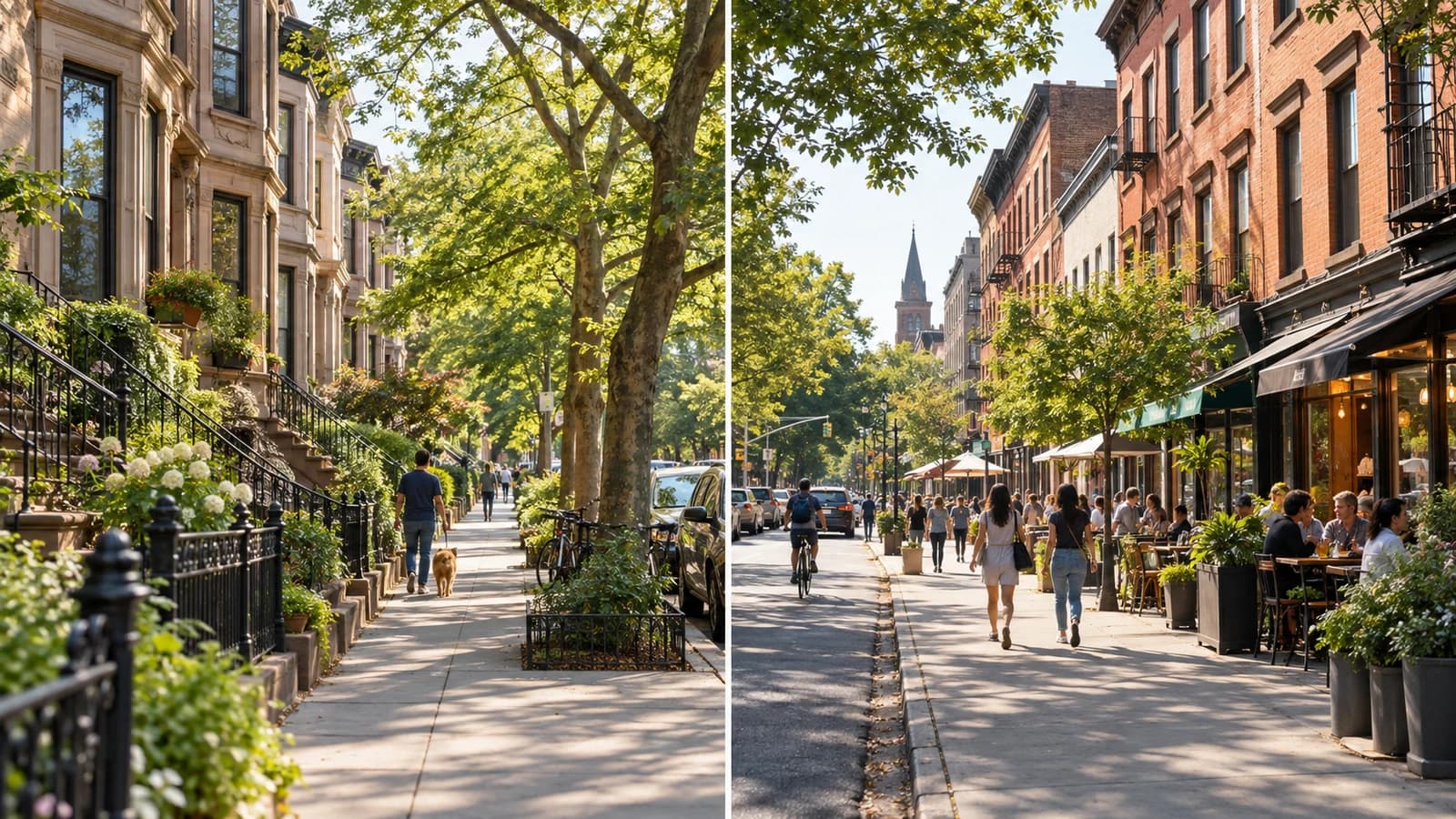
Choose Windsor Terrace when a smaller-scale residential setting and the southern side of Prospect Park fit your routine; choose Park Slope when a broader commercial network and more varied transit access are worth the activity and housing competition. Neither choice applies uniformly: test the exact address, because distance to a useful train or park entrance changes quickly.
Set the decision before the search
Start with transit geography. Windsor Terrace commonly orients around the F and G corridor and buses, while Park Slope addresses can relate to several different subway corridors depending on avenue and latitude. Do not compare neighborhood centers; compare two real listings to the destinations you repeat. Then map the grocery, pharmacy, laundry, school or care trips that matter.
Use a written scorecard with the same categories for every address. Mark facts separately from impressions, and date anything that can change. A direct answer is useful only when the assumptions behind it are visible.
Verify the address, not the reputation
Windsor Terrace sits between Prospect Park and Green-Wood Cemetery and has a more limited commercial footprint than its larger neighbor. Park Slope offers multiple busy avenues and a wider spread of shops and services, but a park-facing label does not tell you the walking route or transit line. Community-district boundaries and real-estate neighborhood labels also do not always match.
Keep links to the official pages you used and recheck them when you are ready to sign or move. Service changes, laws, fees, inventory and access conditions are mutable; this article was verified September 26, 2026.
Do the fieldwork
Walk each candidate from transit with groceries, then continue to the park entrance you would use. Visit at the evening hour when restaurants, schools, traffic and deliveries overlap. Compare building type and condition as carefully as neighborhood atmosphere: elevator, laundry, stairs, storage, heat and street-facing bedrooms may matter more than the name on the listing.
Write down actual door-to-door minutes and unresolved questions immediately. Memory tends to preserve the attractive kitchen or tree-lined block and discard the inconvenient transfer, stairs or missing errand.
Avoid the shortcut claims
Avoid repeating old rent figures as if they describe today's market. Current listing platforms can show inventory direction, but asking prices shift and small samples distort comparisons. Do not reduce the decision to 'quiet versus lively'; both neighborhoods contain calm blocks and active corridors, and both change by time of day.
Treat any superlative—best, safest, cheapest, easiest—as a prompt to ask who measured it, across what geography and when. The useful outcome is a defensible fit for one household, not a universal Brooklyn ranking.
Make the next move
Pick two addresses in each neighborhood, make the same trip and score the same essentials. If Windsor Terrace wins, the result should be because its actual connections and services clear your threshold—not because it was described as a hidden alternative. If Park Slope wins, identify which added convenience justifies the tradeoff.
This page is part of The BK Brief's Living in Brooklyn series. It offers reporting and planning tools, not legal, financial or housing-placement advice. Use the linked agencies and service operators for current rules and individualized help.
Last verified September 26, 2026. Practical details can change; check linked official sources before making plans.