Walk Fort Greene’s Revolutionary History in Context
A November 14 walking tour uses Fort Greene Park’s landscape and monuments to examine Brooklyn’s Revolutionary past. Come ready for history, hills, and questions—not a victory-lap version of 1776.
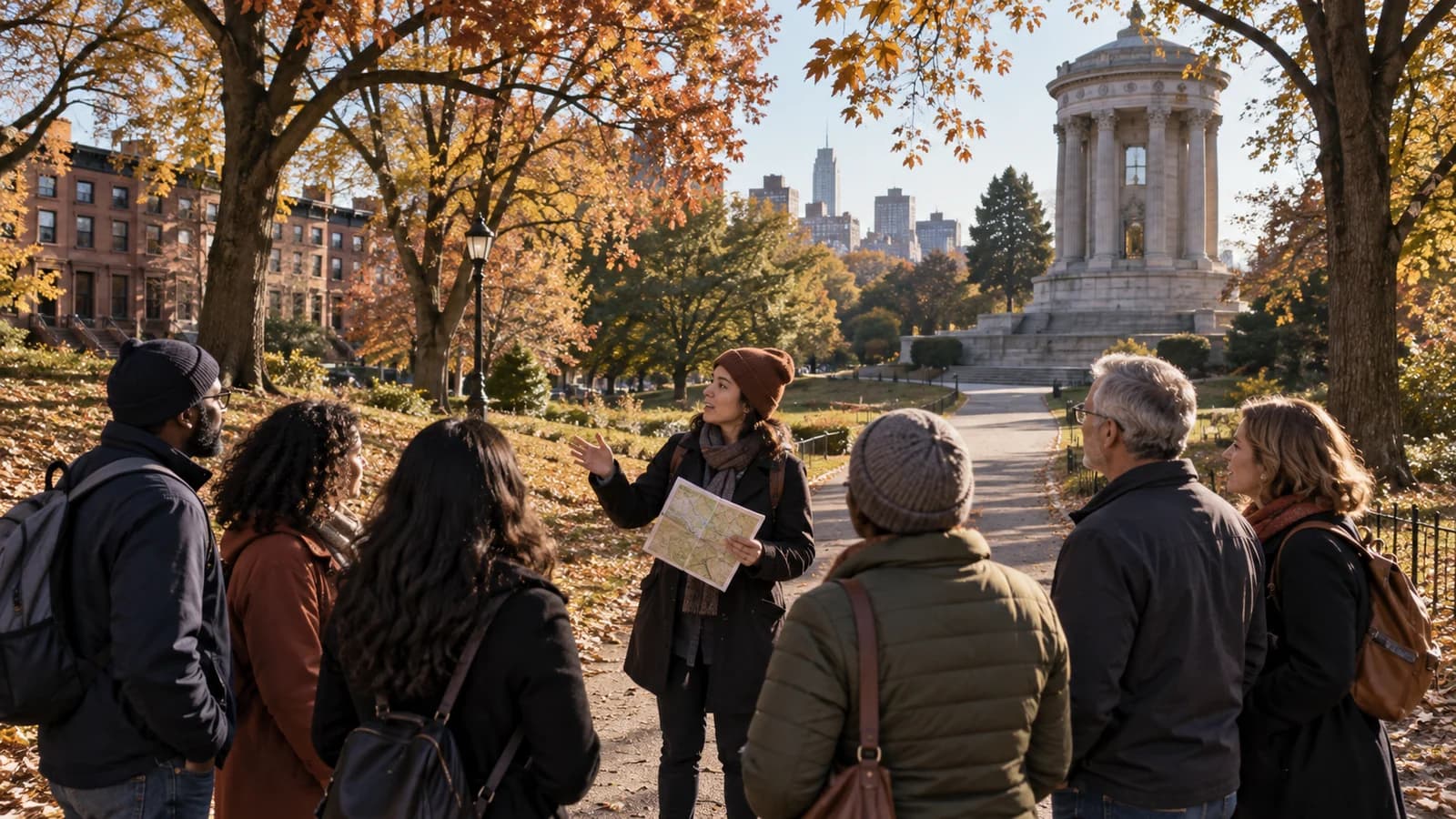
Walking Fort Greene Park isn’t just a stroll—it’s an immersion in how Brooklyn’s Revolutionary history is remembered, reshaped, and retold. On Saturday, November 14, 2026, the America’s 250th Anniversary Tour offers a history walk through the park’s hills and monuments. The official description promises a look at the park’s rich, complex, and evolving legacy rather than publishing a stop-by-stop itinerary.
The listing schedules 90 minutes for walking and storytelling within the broader Brooklyn 250 collaboration. It does not state a price on the cited overview, so confirm any registration and cost terms rather than assuming admission is free.
What Makes This Tour Unique?
Unlike generic history tours, the America’s 250th Anniversary Tour uses the park itself—a major Brooklyn landmark since the 19th century—as a lens for looking at Revolutionary-era memory and civic life. According to the Brooklyn 250 calendar, the tour uses monuments and storytelling to trace the park's relationship to the Revolutionary War. The precise interpretive questions and stops are not published on the cited overview.
A focal point is the Prison Ship Martyrs’ Monument, which the National Park Service describes as both a towering tribute and a crypt for thousands who died aboard British prison ships during the war. Together, the event description and park history make the physical landscape central to understanding the program.
Planning Your Morning: Schedule, Weather and Terrain
The tour is scheduled for 9:30 a.m. to 11:00 a.m., a 90-minute block in the late fall. While the official listing does not specify meeting points, costs, or registration requirements, it’s essential to verify these details—and any updates on the organizer’s website before attending.
Fort Greene Park is known for windy paths, open lawns, and some notably steep hills, according to the National Park Service. Early morning in November can mean brisk weather, so check the forecast and choose layers and supportive shoes appropriate to the conditions and your needs. Because no route or seating details are given, ask the organizer about time on foot, rest opportunities, and weather plans if those points affect participation.
Organizers do not publish seating, restroom stops, or details about accessible routes. If you anticipate mobility, bathroom, or weather-related needs, confirm support and terrain specifics with the organizers before deciding to attend.
Who Should Join—and Who Might Skip This Walk
This event is designed for history lovers, Brooklyn enthusiasts, and anyone curious about how public spaces encode the past. Its published emphasis on a rich, complex, and evolving legacy may appeal to readers who want more context than a monument-only stop.
Families with older children, teens, and adults with a taste for walking tours may find it especially valuable. Anyone who needs a child-focused format, a particular pace, seating, or a mobility-accessible route should contact the organizer because those details are not published in the cited overview.
What You’ll See: Monuments, Landscape, and Layers of Memory
The specific route is not posted. The park's best-known Revolutionary-history features include its former defensive use and the Prison Ship Martyrs’ Monument, but do not assume either is a scheduled stop without organizer confirmation. Today’s lawns and walkways cross land that once held forts and redoubts during the Battle of Brooklyn.
The National Park Service connects the monument and crypt with the more than 11,500 people reported to have died aboard British prison ships. The tour overview does not publish its complete interpretation, so treat that history as useful preparation rather than a promised script.
Tips: Making the Most of the Tour
Come prepared to engage critically. Useful questions can connect the event's stated themes to the park: how did the landscape serve military and civic purposes, and how did later designers shape the memorial setting? These are preparation prompts, not quotations from the tour.
Bring layers for outdoor weather, a water bottle, and supportive shoes. Bring a notepad if you want to record observations; confirm the organizer's current photography expectations before photographing the group. If you want to continue independently, the Conservancy lists visitor-center information, but confirm current hours and understand that access to the monument itself is a separate question. Hours for facilities may change, so confirm ahead.
The cited overview does not advertise food or drink. Bring only what current park and organizer rules allow.
Neighborhood Context and Follow-Up
Fort Greene combines a historically significant park with an active surrounding neighborhood. Before or after the walk, you may want to enjoy local businesses or visit other Brooklyn 250 partner sites, such as the Old Stone House or Green-Wood Cemetery. Check for hours and accessibility—events and open times can shift seasonally.
For questions about the tour’s specific steps, policies, or accommodations, contact the Brooklyn 250 organizer through the event’s current web listing. This is the best source for up-to-date information on schedule, meeting point, registration, terrain, facilities, and possible weather cancellations.
Before you go
America’s 250th Anniversary Tour of Fort Greene is designed to connect with Brooklyn’s Revolutionary history and the meanings we attach to place and memory. Be ready for hills, November weather, and big questions. And before you go, don’t rely on assumptions: confirm all logistics, accessibility, and real-time details with Brooklyn 250’s event listing or organizer. Preparation will make your walk not just a history lesson, but a richer engagement with the park and its evolving story.
Last verified September 24, 2026. Practical details can change; check linked official sources before making plans.