Living in Brooklyn With a Car Is a Weekly Commitment
Test parking, alternate-side rules, insurance, tolls and the trips that genuinely require a car before making it part of your Brooklyn budget.
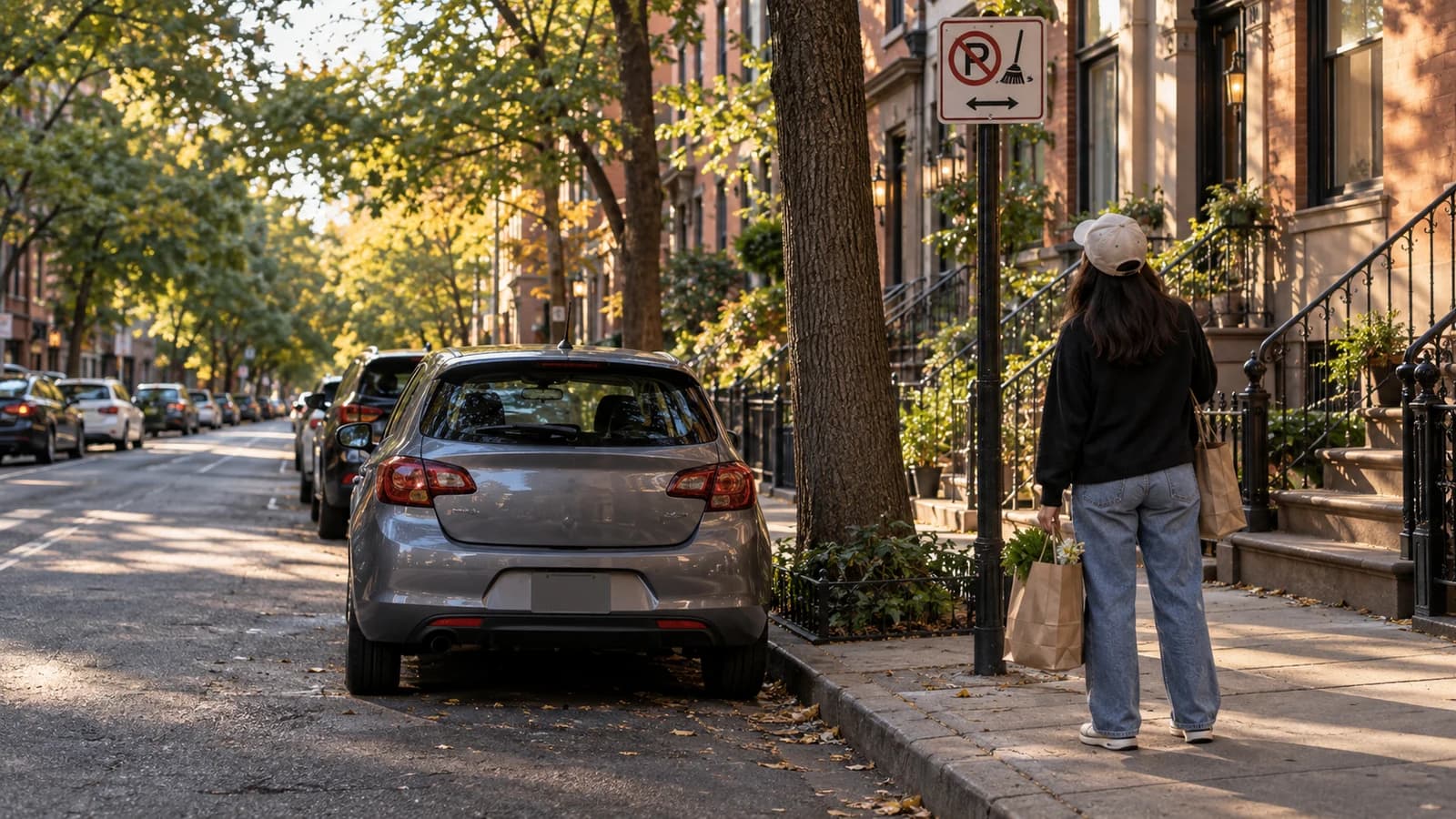
A car can be useful in Brooklyn, but the deciding cost is not only the payment or insurance—it is the recurring work of storing and moving it. Before keeping one, test parking after work, alternate-side obligations, garage pricing, toll routes and how many weekly trips truly become easier. Run the experiment in the exact neighborhood, not Brooklyn in general.
Set the decision before the search
List trips that require cargo, mobility support, late hours or destinations poorly connected by transit. Separate them from trips that are merely familiar by car. Price insurance, registration, fuel, tolls, maintenance, tickets you can realistically avoid and either garage rent or the time spent finding street parking. The honest comparison is car ownership against transit plus occasional taxi, rental or car-share use.
Use a written scorecard with the same categories for every address. Mark facts separately from impressions, and date anything that can change. A direct answer is useful only when the assumptions behind it are visible.
Verify the address, not the reputation
Read every curb sign on the block and the approach to it. NYC 311 explains that vehicles cannot remain on the street side being cleaned while alternate-side parking is in effect; suspensions and rules can change, so use official alerts rather than a remembered schedule. Check whether a garage space is guaranteed, wait-listed, separately leased or too small for the vehicle.
Keep links to the official pages you used and recheck them when you are ready to sign or move. Service changes, laws, fees, inventory and access conditions are mutable; this article was verified September 26, 2026.
Do the fieldwork
Visit after the hour you usually return home and again during a street-cleaning window. Notice hydrants, loading zones, school restrictions, meters and driveway cuts. If accessibility matters, test the full path from a plausible space to the building entrance. A listing that says 'easy parking' is an opinion until your own routine proves it.
Write down actual door-to-door minutes and unresolved questions immediately. Memory tends to preserve the attractive kitchen or tree-lined block and discard the inconvenient transfer, stairs or missing errand.
Avoid the shortcut claims
Do not assume outer neighborhoods automatically mean effortless parking, or that moving a car twice a week will fit a work schedule. Avoid building a budget around never receiving a ticket. Also ask how construction, snow, film shoots or temporary rules are communicated; they are not permanent neighborhood facts, but they affect the lived burden.
Treat any superlative—best, safest, cheapest, easiest—as a prompt to ask who measured it, across what geography and when. The useful outcome is a defensible fit for one household, not a universal Brooklyn ranking.
Make the next move
Choose a four-week trial if possible: record every car trip, parking search and related payment. If the car solves important recurring problems, keep the plan with a contingency for repairs and street changes. If it mostly stays parked, price the alternatives before renewing a garage or insurance commitment.
This page is part of The BK Brief's Living in Brooklyn series. It offers reporting and planning tools, not legal, financial or housing-placement advice. Use the linked agencies and service operators for current rules and individualized help.
Last verified September 26, 2026. Practical details can change; check linked official sources before making plans.