Brooklyn SolarWorks Makes Solar a Gowanus Roof Question
The Gowanus-based installer focuses on New York City roofs, co-ops, businesses and construction projects, but a useful solar plan starts with permits, incentives and contractor checks.
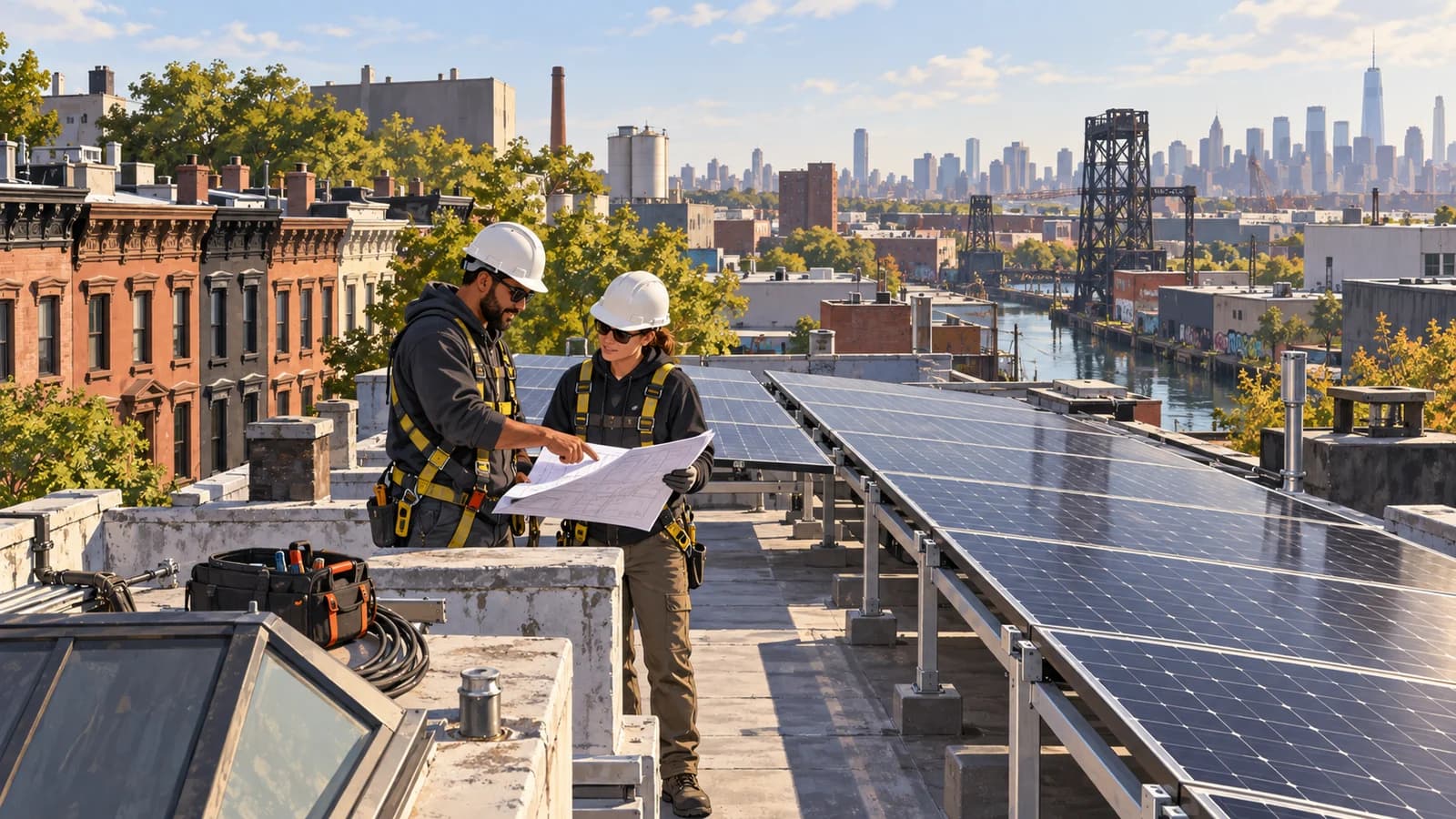
Brooklyn SolarWorks is a local service provider to know before treating solar as either impossible or obvious for a Brooklyn roof. The company lists its headquarters at 200 6th Street in Gowanus and describes itself as a Brooklyn-based solar design and installation firm serving New York City homes and businesses.
That local angle matters because New York City solar is rarely a generic suburban panel job. Roof shape, fire access paths, landmark constraints, co-op boards, electrical service, Con Edison interconnection and incentive paperwork can all change what is practical.
What the company focuses on
Brooklyn SolarWorks says it works on homes, co-ops and condos, commercial buildings and construction projects. Its official site emphasizes flat roofs, brownstones, townhomes, multifamily buildings, shared common-area demand and designs that fit city code and roof constraints.
The company also says it has completed more than 3,000 systems and has a hyper-local focus, with many projects close enough to its Gowanus base for the team to understand neighborhood conditions. Treat those claims as context, not as a substitute for your own contractor diligence.
Why a consultation is not just a sales call
A useful solar consultation should answer whether the roof can actually support a system, whether shade or fire-code paths limit panel placement, whether the building's electrical service is ready, what permits are needed and which incentives may apply. It should also make clear who designs, installs, monitors and services the system after completion.
Brooklyn SolarWorks highlights design approaches for difficult city roofs, including elevated panel arrangements. That is exactly the kind of topic a homeowner should ask about in plain terms: where panels go, what roof area stays clear, how penetrations are sealed, how maintenance works and what happens if the roof needs future work.
Use NYSERDA as a second lens
NYSERDA says homeowners, small businesses, nonprofits and local governments can be eligible for NY-Sun incentives when they work with a participating contractor. It also says participating contractors inspect the location, assist with incentive paperwork, install the system and submit required paperwork to NYSERDA.
NYSERDA's contractor guidance is useful because it gives readers a neutral checklist. It explains that contractors can earn Quality Solar Installer status by meeting annual quality criteria, including active NY-Sun status, project volume and inspection performance. That does not mean one contractor is right for every roof, but it does give a standard beyond marketing language.
Questions to ask before signing
Ask for the legal contractor name, license and insurance information, proposed system size, expected production, roof layout, fire-access clearances, warranty terms, financing terms, incentive assumptions, interconnection timeline and what happens if permits or incentives change. If the building is a co-op or condo, ask how board approvals and shared benefits are handled.
Also ask who will be on site, whether subcontractors are used, how roof penetrations are protected, whether monitoring is included and how service requests are handled after installation. Solar can be a strong long-term investment, but only if the contract, building conditions and assumptions are clear.
Before you book
Gather a recent Con Edison bill, roof information, board or landlord rules, landmark status, prior roof work and any renovation plans. Then use Brooklyn SolarWorks' official consultation path and compare the written proposal with NYSERDA's contractor guidance before signing.
This article was verified September 28, 2026 from Brooklyn SolarWorks' official pages and NYSERDA contractor guidance. Reconfirm licensing, incentives, rates, financing, permits, warranty terms and project eligibility before hiring.
Last verified September 28, 2026. Practical details can change; check linked official sources before making plans.