Riding the Bus in Brooklyn: Stops, Taps and Transfers
Find the right stop, board the correct door and keep one payment method for transfers. A practical Brooklyn bus guide using current MTA rules.
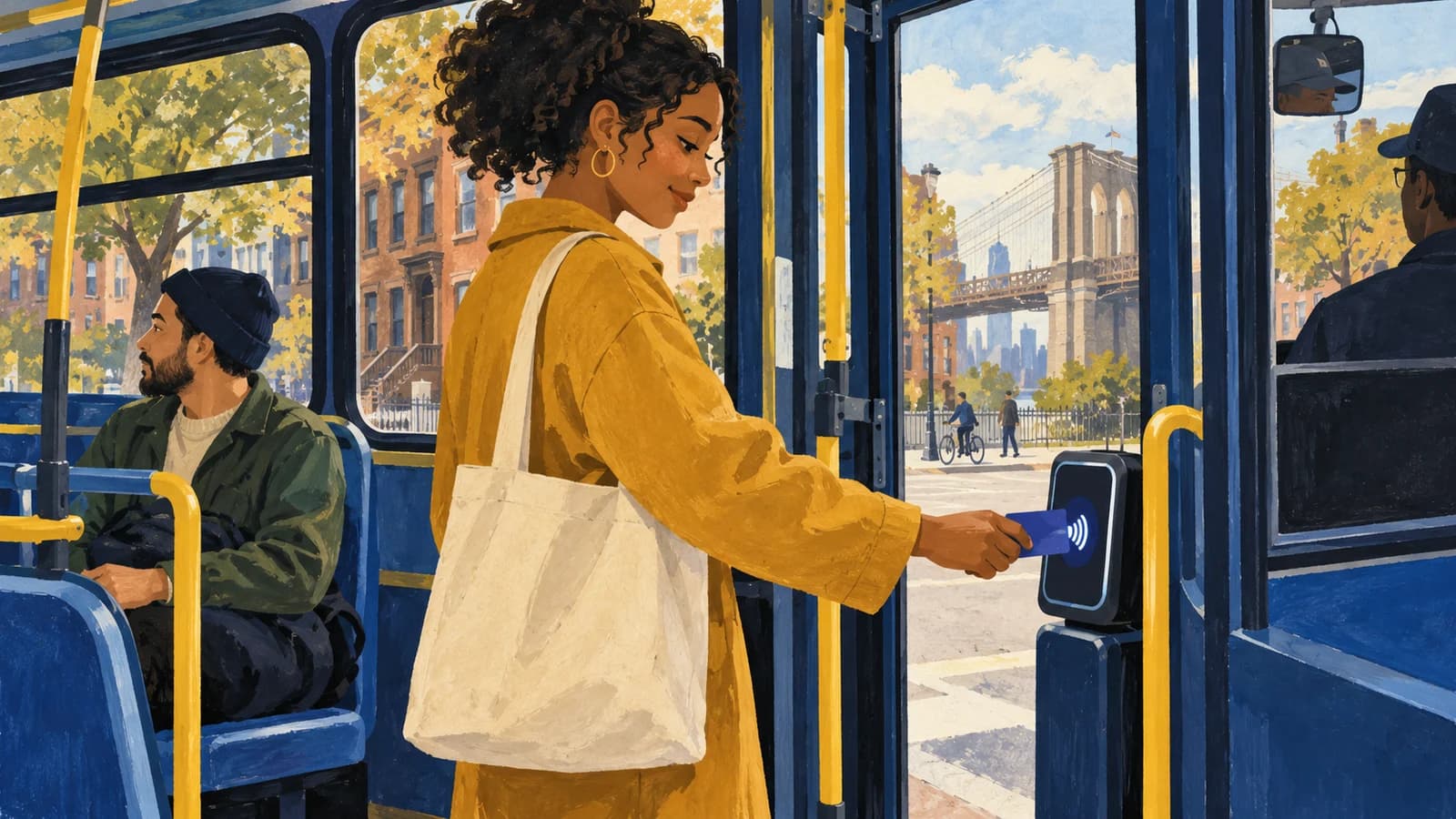
Riding the bus in Brooklyn means matching a route and direction to your destination, then using the right boarding and payment method. Whether you’re heading to a new neighborhood or just want a smoother commute, knowing the current MTA rules can help you avoid common snags and make your ride easier.
If you’re new to Brooklyn buses, start by deciding your route and direction. The MTA’s official bus guide and BusTime show live arrivals and route maps. Double-check both the route number and direction—local, limited, and Select Bus Service (SBS) services can have different stop lists. For example, if you’re traveling between neighborhoods, confirm whether your stop is served by local, limited, or SBS, since limited and SBS routes skip some local stops.
Finding the Right Stop and Service
Bus stops are marked with blue-and-white signs showing route numbers and a list of buses that stop there. Not all stops serve every type of service—limited and SBS routes often have fewer stops than local buses. If you’re planning a trip that requires a specific stop, use the MTA’s route maps to confirm your stop is served by your chosen bus type. Before boarding, read the destination displayed on the approaching bus. If you are unsure, ask the operator while the bus is stopped rather than assuming a route number alone identifies the trip you need.
Boarding and Paying: OMNY and Transfers
The MTA fare page lists $3 for most riders on local, limited, rush and SBS buses, and $7.25 for express buses, checked October 14, 2026. As of October 2026, the MTA accepts OMNY contactless payment (card, phone, wearable, or OMNY card). If you’re using OMNY, tap the same exact payment method for each ride to ensure your free transfer and fare cap are tracked. For example, if you tap in with your phone, do not switch to a physical OMNY card for your next ride—this will start a new fare. Learn more about OMNY.
MetroCard sales and refills ended January 1, 2026, and cash/MetroCard acceptance will end later in 2026 (date to be announced). If you still use a MetroCard or coins, check the MTA transition page for updates before your trip.
Boarding rules depend on the bus type. For local, limited, rush hour, and express buses, board at the front door and tap at the fare reader. On SBS, you can board at any door, but you must tap at a reader located at each door. If you’re traveling with children under 44 inches, up to three can ride free with a fare-paying adult on local, limited, rush hour, or SBS buses.
Making Transfers and Fare Caps
You get one free transfer within two hours of your first paid ride, valid between subway and bus, or bus to bus. If you transfer from a local to an express bus, you pay only the difference. To ensure your transfer is recognized, always use the same exact OMNY payment method for each leg of your trip. For example, if you start your trip with a contactless credit card, use that same card for your transfer.
OMNY’s fare-cap page explains the seven-day cap: after $35 in fares on subway and local buses (or $67 including express buses) within a seven-day cap period, additional rides are free for the rest of that period. This is not tied to a calendar week, so your cap period starts with your first tap. If you’re planning a week of heavy travel—say, daily commutes plus weekend outings—using the same OMNY method can help you reach the cap and save money.
Requesting Stops and Exiting
To signal your stop, press the yellow strip, pull the cord, or push the button before your stop. Exit at the rear door unless you need the operator’s help with a ramp. If you’re traveling late at night on a local bus, you can ask the operator to let you off between stops where it’s safe, but this is not available on SBS, limited, or shuttle buses.
Accessibility and Operator Assistance
All MTA buses are accessible. If you use a wheelchair or need the bus to kneel, wait near the stop where the operator can see you. Operators can deploy the ramp, kneel the bus, and secure wheelchairs. If you need extra time or assistance, let the operator know as you board. For more details, see the MTA’s accessibility guide.
Before You Go
Check Bus Time for live bus information and MTA service updates for disruptions before heading out. If you rely on MetroCard or coins, review the MTA’s transition updates to avoid surprises. If you have accessibility needs, consider asking about ramp deployment or securement procedures for your specific stop. For families, confirm the number of children eligible for free rides with your fare. If you’re planning multiple trips or transfers, make sure to use the same OMNY payment method throughout your journey to maximize fare caps and transfer benefits.
Last verified October 14, 2026. Practical details can change; check linked official sources before making plans.