Inside NYCHA’s Model for Cleaner Apartment Retrofits
A Brooklyn Navy Yard demonstration apartment brings heat pumps, induction cooking, efficient windows and radiant panels into one practical retrofit showcase.
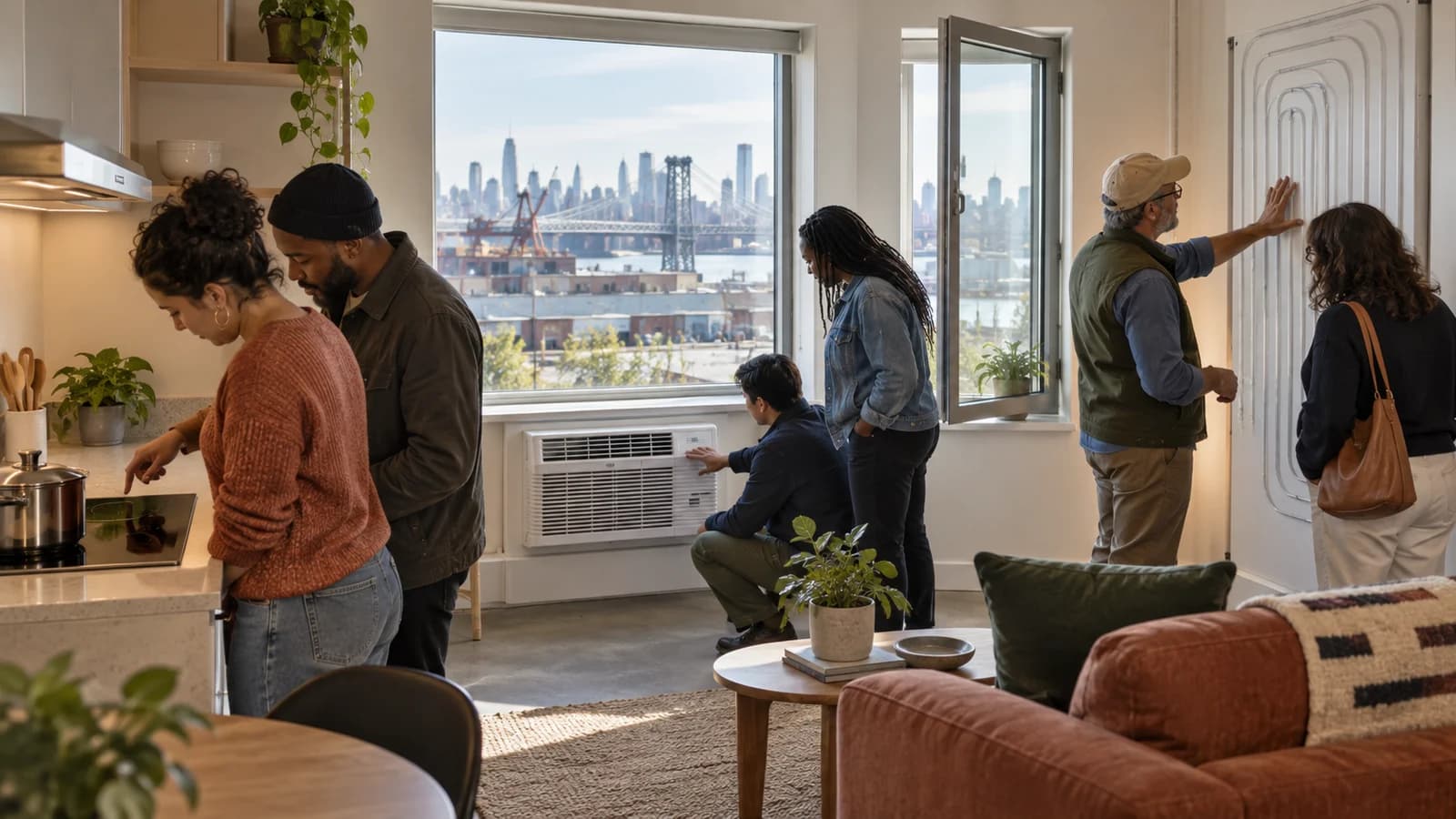
A new model sustainability apartment at the Brooklyn Navy Yard is showcasing practical retrofits that could transform living conditions in New York City’s aging public housing. Debuted by NYCHA, NYC, and the Navy Yard on September 22, 2026, this demonstration space aims to inform how future upgrades enhance indoor comfort and energy efficiency for tenants.
While this is not a new public apartment or a direct preview of imminent installations citywide, the showcase gives residents, property managers, and design teams a hands-on look at technologies that could shape future retrofits—an urgent issue for Brooklyn's public housing residents and those invested in healthier, more efficient living conditions.
A Look Inside the Navy Yard Demonstration
The new demonstration apartment sits within the Brooklyn Navy Yard, designed not for permanent occupancy but as a learn-by-seeing environment. It brings together four technologies intended for the constraints of retrofitting occupied multifamily buildings: window heat pumps, efficient windows, electric cooking and radiant panels.
Showcased in the unit are packaged window heat pumps engineered for easier installation in large multifamily buildings, triple-pane casement windows that fit around the heat pump sleeves, far-infrared radiant panels for supplemental heat, and a battery-backed, 120-volt induction stove.
Each system is at a different stage of development and deployment. For example, window heat pumps have already piloted in select NYCHA properties, while the battery-supported induction cooking concept is still experimental—reflecting the evolving nature of retrofit technology for New York's unique building stock.
Why Apartment-Level Retrofitting Is Challenging
Retrofitting public housing is considerably more complex than installing new equipment in private homes. Existing multifamily buildings can have electrical, envelope and installation constraints that make a single retrofit approach difficult to apply at scale.
The showcased equipment is designed around practical retrofit questions, including electrical capacity and the disruption that major building work can create. The demonstration’s battery-supported induction stove, for example, tackles this by running on conventional 120-volt outlets—a workaround that, if proven viable, could circumvent expensive upgrades.
Resident comfort and indoor air quality are also pivotal. NYCHA frames resident health and comfort as priorities in its sustainability agenda. The displayed products are intended to test ways of improving apartment performance, but the showroom itself does not establish outcomes in occupied homes. Still, until these technologies are installed widely and tested in real-world use over time, their benefits for every resident remain to be validated.
NYCHA’s 2026 Sustainability Agenda and Measurable Targets
The model apartment aligns with commitments laid out in NYCHA’s 2026 Sustainability Agenda—a roadmap with specific, time-limited goals. By 2031, NYCHA aims to install heat pumps in 20,000 apartments and induction stoves in 10,000, subject to funding, infrastructure readiness, and successful pilot outcomes. These are targets, not delivered totals, reflecting the scale of the challenge ahead for the city’s largest landlord.
Accountability and clarity matter in public communications. Unlike some announcements that can blur demonstration with deployment, city officials have separated out this demonstration as a proving ground—meaning the presence of a technology in the Navy Yard showcase does not guarantee its immediate or even eventual use in all NYCHA apartments. Feedback from residents and stakeholders will factor into which technologies scale up.
Pilots Provide Early Data, Not Guarantees
NYCHA’s approach is to pilot technologies where feasible before moving to broader rollouts. Room heat pumps, for instance, are being closely watched for their real-world cost and climate impact. According to the New York State Energy Research and Development Authority (NYSERDA), a recent pilot at Woodside Houses in Queens yielded promising results, with heating energy intensity dropping by more than 75 percent compared to the existing two-pipe steam system.
These pilots offer early but incomplete evidence. They are monitored demonstrations and may not scale identically in all buildings. Designs may be updated further as new products become available, as mentioned in the official rollout of the Brooklyn Navy Yard model.
Resident Experience: Comfort, Air, and Agency
Central to NYCHA’s published sustainability agenda is resident health and well-being. Heat pumps and induction stoves are being evaluated as tools for cleaner heating, cooling and cooking, but resident experience will depend on how equipment performs, is maintained and fits into daily life.
NYCHA and city officials describe the Navy Yard demonstration as a resource for residents, project teams, property managers and other stakeholders. The announcement does not publish general visiting hours or a public reservation process, so readers should not treat it as a drop-in attraction.
Technology Deployment: Phases and Uncertainties
Bringing advanced retrofits to tens of thousands of apartments will be a phased process shaped by funding, technology readiness, infrastructure assessments, and ongoing stakeholder feedback. While some showcased equipment—such as window heat pumps—has moved from pilot to initial deployment, others, like battery-backed induction stoves, remain at the concept or early field-test stage.
Moreover, every Brooklyn development has unique characteristics affecting installation speed and ease. Electrical capacity, product readiness and project planning can affect which approaches work at a particular development. The city and NYCHA have signaled that as products improve and prices change, the demonstration unit will be updated—reinforcing that the displayed package remains a work in progress rather than a finished template for every property.
What happens next
Looking ahead, NYCHA will continue piloting, evaluating, and iterating on promising retrofit solutions such as those featured at the Brooklyn Navy Yard demonstration apartment. The agency’s progress toward its 2026 Sustainability Agenda targets will depend on funding, feedback from pilot projects, infrastructure assessments, and new product developments. Brooklyn residents and local property managers can expect periodic updates as retrofit technologies mature, but broad deployment and immediate benefits will hinge on further demonstration results.