Choose a Brooklyn Playground by the Logistics
Use official directories to check play equipment, bathrooms, access, shade, seating and permit needs—then keep a nearby backup for closures.
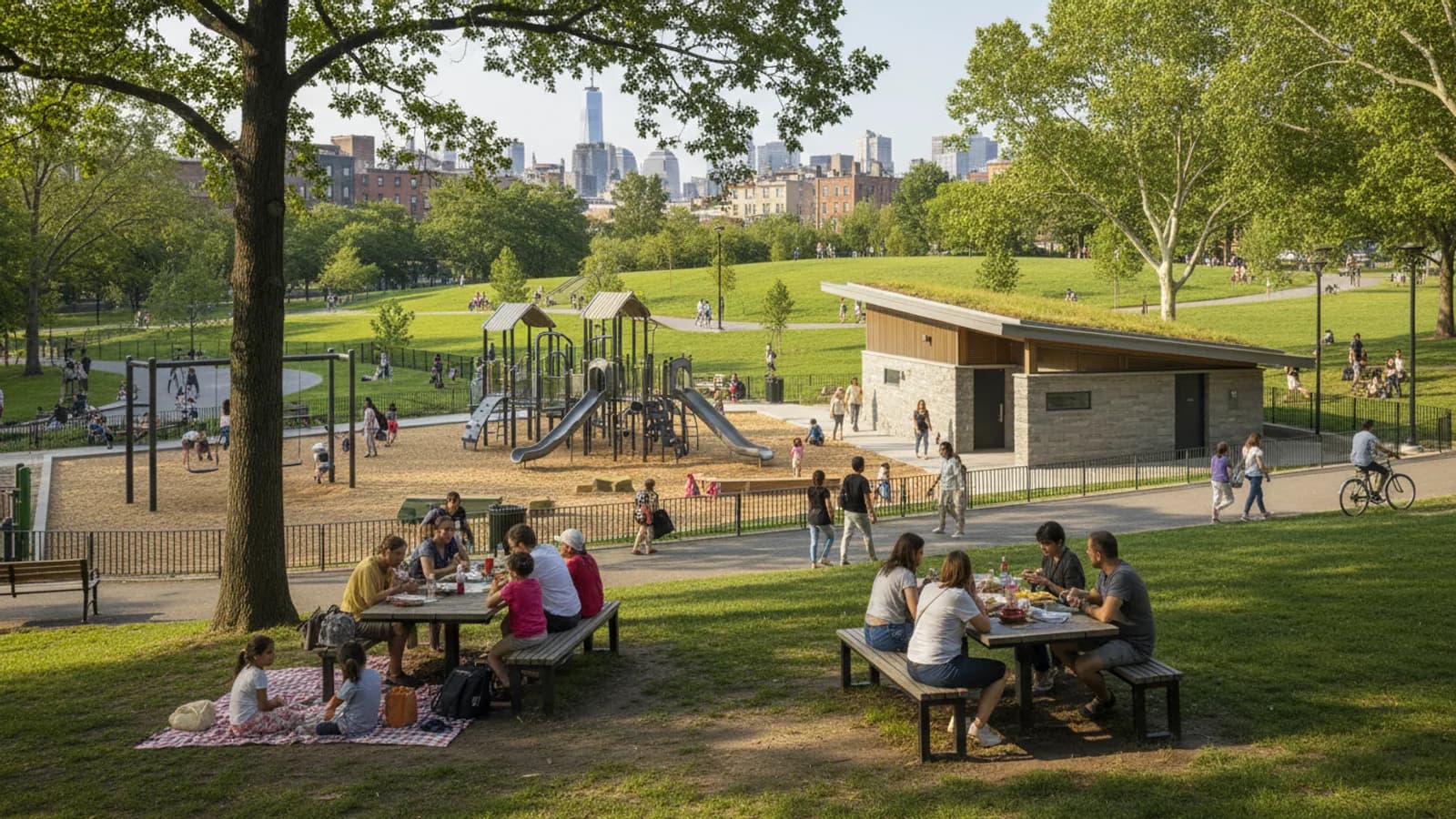
Choose a Brooklyn playground from the needs of the outing, not a generic best-of list. Search the NYC Parks playground and restroom directories separately, open the individual park page, and confirm whether the two facilities are actually close. Then check the route, age fit, shade, seating and any current closure before leaving.
Start with the age and purpose
Equipment is not interchangeable. A toddler area needs containment, manageable surfacing and a caregiver sightline; older children may want climbing, courts or open space. NYC Parks listings do not replace supervision or an on-site assessment. If children have different ages, choose a layout where caregivers can watch both zones rather than assuming adjacent equipment solves the problem.
Price the whole plan
NYC public playground entry is free, but organized gatherings, amplified sound, field use or other activities may require a permit. Review the current permit rules instead of copying a group-size threshold from an old article. Bring a blanket if tables are important, because a listed picnic area does not guarantee an available table.
Check access and everyday logistics
Treat accessibility as a route, not a badge. Verify the entrance, surfacing, path to equipment, restroom accessibility, seating and transit connection. A park can have an accessible entrance while the desired play feature or restroom remains difficult to reach. Call 311 or the park contact when a specific feature determines whether the outing works.
Build a plan with a backup
Start with bathroom proximity, then add two priorities such as shade, spray features, swings, courts or picnic space. Save a second playground in the same area. Bring water and weather protection; spray showers and fountains are seasonal, and tree cover changes through the year. Agree on a meeting point before children begin playing.
Write the make-or-break requirement at the top of the plan and keep optional preferences below it. That small distinction makes it easier to change course without losing the part of the day, meal or application that the household actually needs.
Verify before you go or apply
Check the individual park page and relevant facility directory on the day of the trip. Look for construction, weather or maintenance notices and read posted rules on arrival. This page was substantially verified September 26, 2026; facility status remains a confirm-before-going detail.
Details that should be explicit whenever they are known: age fit, cost, registration or reservation requirements, restroom and stroller conditions, accessibility, food rules and the date checked. Unknown details stay unknown; contact the responsible operator rather than filling the gap with an assumption.
Avoid the shortcut
Do not infer an open restroom from a map pin, promise shade from a summer photograph or describe a playground as accessible without naming the supported feature. Dogs are not permitted in playgrounds, and picnic or grilling rules belong to the specific park and designated area.
This page is part of The BK Brief's Family Life desk. It provides a source-led research and planning method, not childcare placement, education, medical, dietary or legal advice. Use the linked agencies and operators for current requirements and individual support.
Last verified September 26, 2026. Practical details can change; check linked official sources before making plans.