Brooklyn Museums: Pick the Right One for Your Day
Compare Brooklyn museums by subject, visit length, age group, access needs, and what else you want to do nearby.
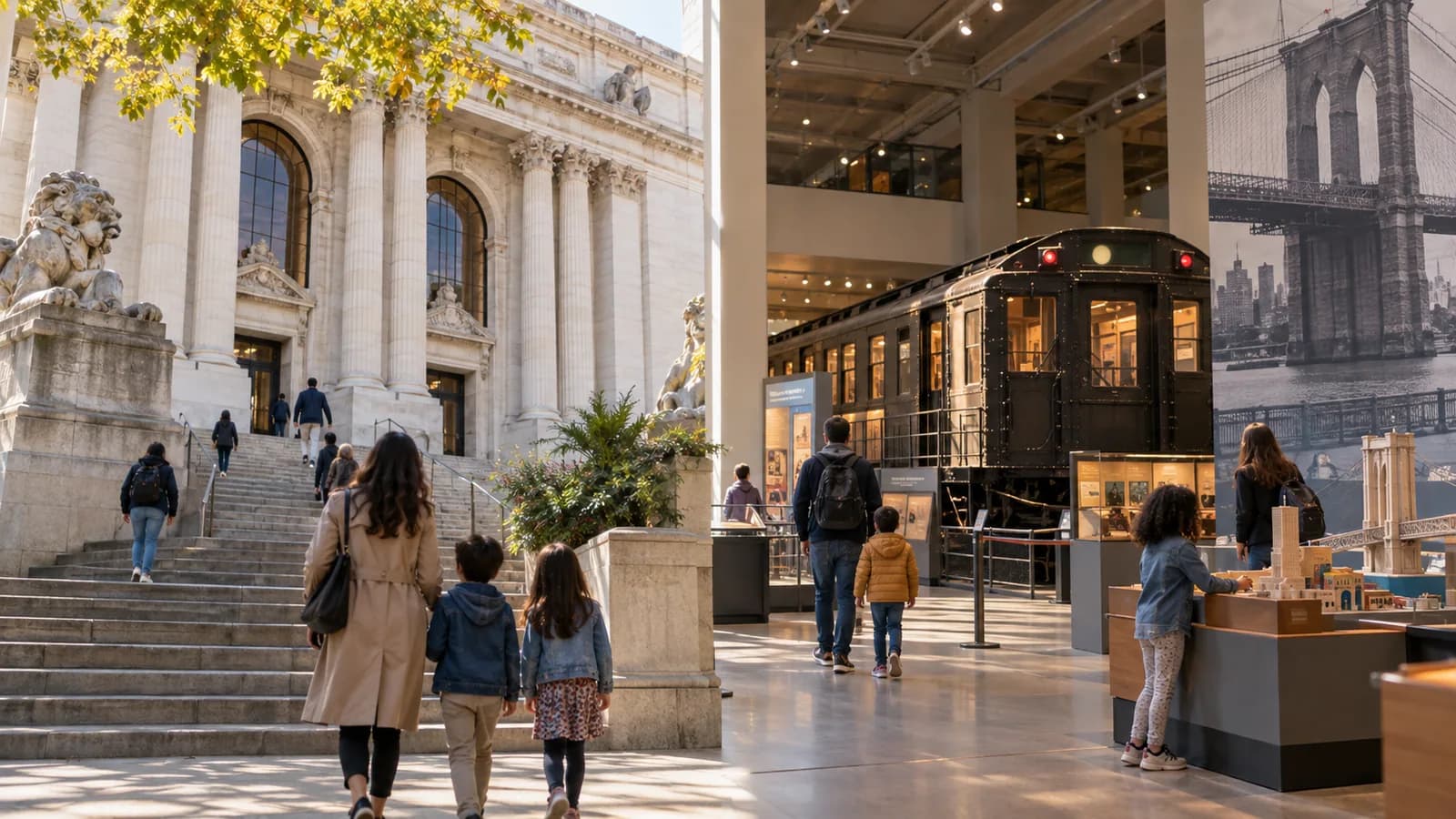
Brooklyn museums are not interchangeable. The borough has a major art museum beside Prospect Park, a transit museum inside a decommissioned subway station, a hands-on children’s museum, historic houses, and smaller collections built around local stories. The best choice depends on who is going, how much time you have, and whether the museum is the whole day or one stop in it.
This comparison starts with three high-interest institutions—the Brooklyn Museum, New York Transit Museum, and Brooklyn Children’s Museum—then explains when a smaller Brooklyn museum may be the smarter plan. Hours, admission, exhibitions, and reservation rules change, so use the official links before leaving home.
Which Brooklyn museum should you visit?
Choose the Brooklyn Museum when art and a broad collection are the main purpose of the day. Its Eastern Parkway location also makes it the easiest of these choices to combine with Brooklyn Botanic Garden or Prospect Park. A visitor can spend a focused couple of hours or build a much longer culture day around the area.
Choose the New York Transit Museum when the setting matters as much as the collection. Its Downtown Brooklyn home is a historic subway station, and the exhibits focus on the city’s transportation story. The official museum strongly encourages advance reservations and publishes specific access instructions because the main entrance uses stairs while an accessible entrance is in a different location.
Choose Brooklyn Children’s Museum when children need to touch, build, move, and make decisions rather than follow an adult gallery pace. Plan around the ages and energy levels in your group, and check the museum’s current ticket sessions and visitor rules.
Plan the Brooklyn Museum as an anchor
The Brooklyn Museum is best treated as the anchor, not a box to check between too many other stops. Look at the current exhibitions and collection areas before you go, then choose one or two priorities. This prevents a large building from turning into an exhausting march through every floor.
The Eastern Parkway–Brooklyn Museum subway station places visitors close to the entrance, but current service can change. Build in time for security, ticketing, coat or bag rules, and any access questions. If the museum is only part of the day, pair it with one nearby outdoor stop rather than trying to cover the museum, garden, park, and a long meal in a single rushed circuit.
Know what makes the Transit Museum different
The New York Transit Museum’s Brooklyn location is at 99 Schermerhorn Street in a decommissioned station. That setting creates a memorable visit, but it also shapes the practical plan. The official visitor page says advance booking is strongly encouraged, explains that only limited same-day tickets may be available, and provides separate directions for the wheelchair-accessible entrance.
Check current conditions before going. A historic underground space may have different temperature, stair, stroller, and group-visit constraints from a conventional museum. The official page is more useful than an old review because it carries temporary facility notices alongside admission and access rules.
Downtown Brooklyn and Brooklyn Heights make logical second stops. Keep enough margin around a timed ticket so a meal or subway delay does not consume the entry window.
Match the Children’s Museum to the child
Brooklyn Children’s Museum in Crown Heights works best when adults plan for participation instead of completion. Pick a few experiences that suit the youngest visitor, allow time for transitions, and keep a food or quiet-break strategy in reserve.
Before booking, confirm the day’s hours, ticket session, stroller rules, food policies, sensory resources, and accessibility information on the official site. Weekend and school-break demand can feel different from a weekday visit. Families combining the museum with another destination should make the second stop optional; an engaged child may need more time than the schedule predicted.
When a smaller museum is the better answer
Brooklyn’s smaller museums and historic sites can offer a narrower subject with a shorter, more conversational visit. The Wyckoff House Museum, City Reliquary, Brooklyn Seltzer Museum, and other specialized places already covered by The BK Brief each answer a different question about the borough.
These sites may use guided tours, limited opening days, appointments, or small-capacity sessions. That is not a drawback if the subject is exactly right for your group. It does mean a spontaneous visit requires more verification than a walk into a large institution.
How to compare tickets, access, and time
Use the same checklist for any museum in Brooklyn:
- Confirm the official opening day and entry window.
- Check whether advance tickets are required or merely recommended.
- Read the institution’s own accessibility page, including entrance details.
- Decide on one must-see area before adding nearby attractions.
- Allow extra time for security, elevators, restrooms, food, and transit.
- Recheck temporary facility notices on the morning of the visit.
Admission programs and free hours can change, and eligibility rules may apply. Follow the museum’s official language rather than a third-party list that may be out of date.
Before you go
For a broad art day, start with the Brooklyn Museum. For transportation history in an unusual setting, choose the New York Transit Museum. For a hands-on family outing, begin with Brooklyn Children’s Museum. If a specific slice of Brooklyn history is the real interest, look at a smaller museum and plan around its schedule.
Whichever museum you choose, verify tickets, hours, current exhibitions, bag policies, and access directly. A good Brooklyn museum day is built around one clear priority with enough room for the neighborhood around it.
Last verified September 16, 2026. Practical details can change; check linked official sources before making plans.