Pick a First Glass Class at Brooklyn Glass
Glassblowing, flameworking and neon demand different time, heat and hand skills, so the best beginner booking starts with the process—not the souvenir.
Curious about making glass art but not sure where to start? Brooklyn Glass offers beginner-friendly classes in glassblowing, flameworking and neon, each with its own pace, tools and skills. Picking the right class means thinking about your comfort with heat, group work, fine-motor tasks and how hands-on you want to get.
Brooklyn Glass, at 142 13th Street in Gowanus, is a 4,000-square-foot, artist-owned studio with a reputation for welcoming newcomers. Here’s what to know before you book your first class, from what sets each process apart to practical tips for a smooth experience.
Glassblowing: Teamwork and Heat
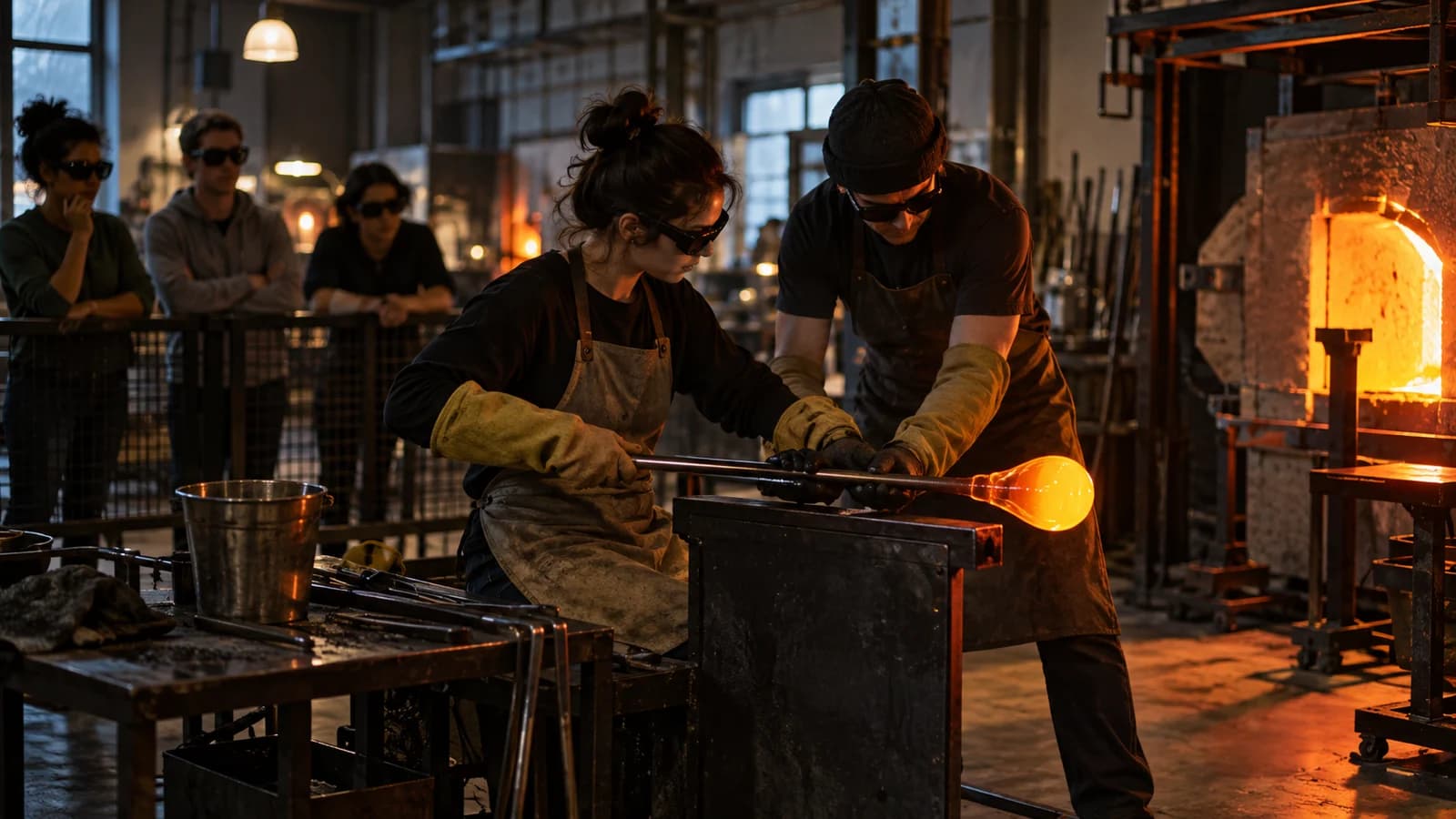
Glassblowing is the classic image of molten glass on a blowpipe, shaped by breath and movement. At Brooklyn Glass, beginner glassblowing classes typically involve working in small groups, rotating through roles under close instructor supervision. Expect to handle hot tools and work near a furnace, but you’ll never be left unsupervised. The process is physically active—standing, turning pipes, and using both hands. It’s best for those comfortable with teamwork, moderate heat, and following step-by-step guidance.
Because glass must cool slowly in a kiln, you won’t take home your piece the same day. Pickup is usually scheduled for a later date, and delays can happen. If you’re looking for a social, energetic introduction to glass, glassblowing is a strong choice—but be ready for heat, noise and a group setting.
Flameworking: Precision and Focus
Flameworking (sometimes called lampworking) uses a tabletop torch to melt glass rods and tubes. Brooklyn Glass offers beginner flameworking classes that focus on small-scale objects, like beads or simple sculptures. This process is quieter and more individual than glassblowing, with each student working at their own station.
Flameworking suits those who enjoy detailed, hands-on work and can focus on fine-motor tasks. You’ll still need to be comfortable with open flame and safety gear, but the heat is more localized than in glassblowing. Expect to sit or stand for extended periods, and to wear eye protection. Finished pieces may be ready to take home sooner, but cooling times can vary. If you prefer a slower pace and more control over your project, flameworking is a good fit.
Neon: Drawing with Light
Neon classes at Brooklyn Glass introduce the basics of bending glass tubes and filling them with gas to create glowing signs or art. This process combines heat, hand-eye coordination and design skills. Beginners can expect to work with torches and shaping tools, guided closely by instructors.
Neon is less physically demanding than glassblowing but requires steady hands and patience. The process is technical, and finished pieces often need additional processing before they’re ready for pickup. Neon suits those interested in both craft and design, and who are comfortable with a slower, more methodical pace. If you’re drawn to the idea of making your own light art, neon is worth considering.
Booking and Eligibility
Class schedules, formats and pricing at Brooklyn Glass can change, so always check their website or contact the studio directly for the latest details. Most beginner classes are open to adults and older teens, but age limits, group sizes and project types may vary. Private lessons are sometimes available for those seeking one-on-one instruction or a custom experience.
Booking in advance is recommended, especially for popular weekend sessions. Cancellation policies, rescheduling options and refund terms should be reviewed before you commit. If you have specific needs—such as step-free access, seating, or accommodations for heat sensitivity—reach out to the studio in advance to discuss what’s possible.
What to Wear and Bring
Safety is a priority in any glass studio. Brooklyn Glass generally requires closed-toe shoes, natural-fiber clothing (like cotton), tied-back hair, and no loose jewelry. However, requirements can change, so confirm dress codes and safety gear with the studio before your class. Eye protection is usually provided, but you may be asked to bring your own if you have prescription safety glasses.
Expect to stand for much of the session, especially in glassblowing. Some processes require moderate grip strength and dexterity. If you’re pregnant, have mobility concerns, or are sensitive to heat or noise, discuss this with the studio before booking. Spectators and children are typically not allowed in the hot shop for safety reasons, but policies can vary.
Picking Up Your Work
Glass pieces must cool slowly to prevent cracking, so same-day pickup is rare. Brooklyn Glass will let you know when your project is ready, but delays can happen, especially after busy weekends or holidays. If you’re visiting from out of town, ask about shipping options or pickup timing before you book.
Neighborhood and Getting There
Brooklyn Glass is located in Gowanus, a neighborhood known for its creative spaces and industrial vibe. The studio is accessible by subway and bus, but parking can be limited. The facility is on street level, but step-free access and restroom accommodations should be confirmed if needed. Plan to arrive a few minutes early to check in and review safety rules.
Before you go
Choosing your first glass class at Brooklyn Glass is about matching your interests and comfort level with the right process. Whether you’re drawn to the teamwork of glassblowing, the focus of flameworking, or the design possibilities of neon, each offers a unique introduction to glass art. Confirm all details—class format, safety requirements, accessibility, and pickup timing—directly with the studio before booking. With the right preparation, you’ll get a safe, memorable start in Brooklyn’s vibrant glass community.
Last verified September 19, 2026. Practical details can change; check linked official sources before making plans.