What Broadway Junction’s Renovation Changes for Riders
Seven planned elevators, escalator work and a new entrance are central to the station overhaul. Future access and today’s service require different checks.
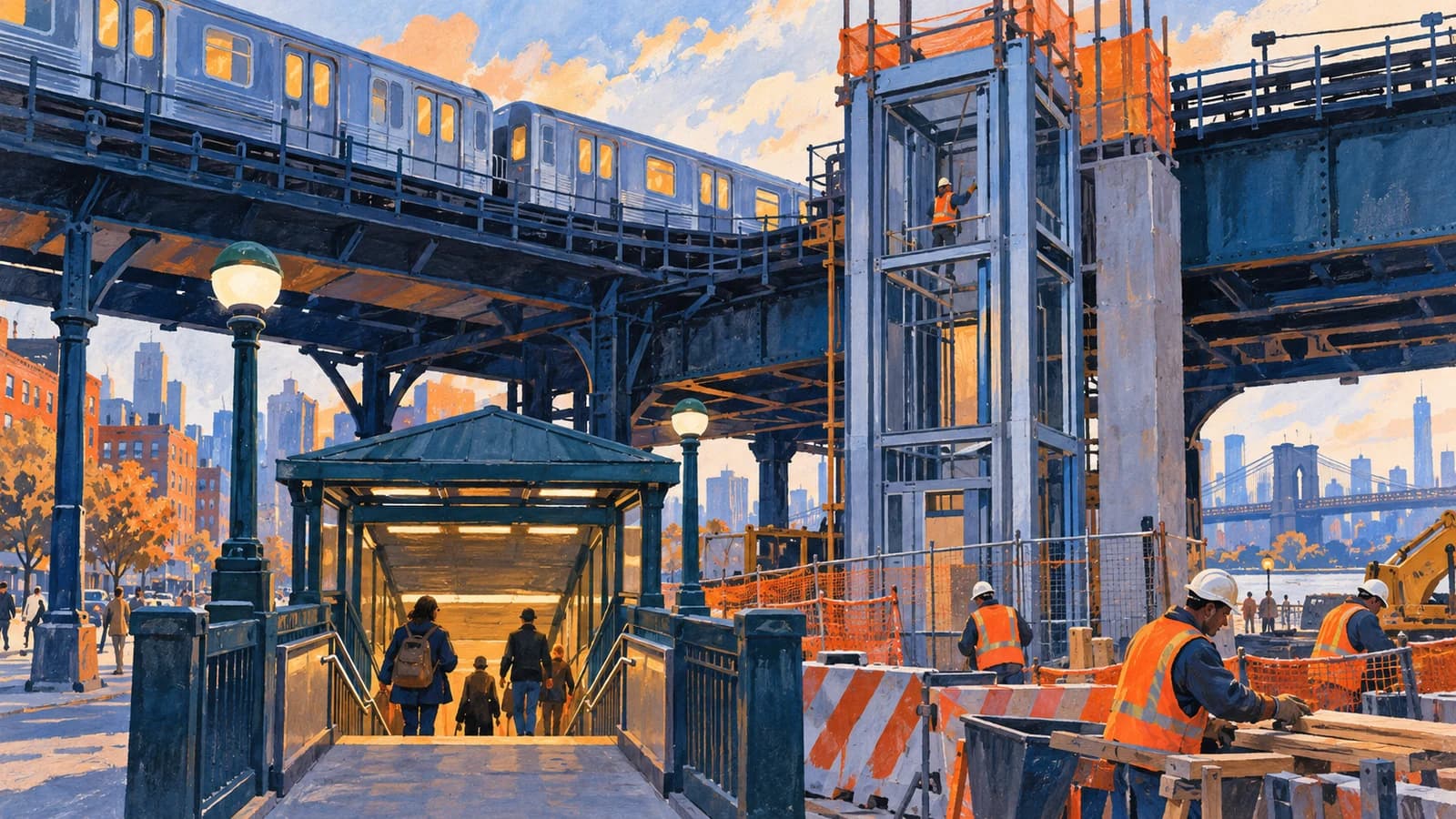
Broadway Junction’s subway renovation is about making a complicated transfer station easier to enter and move through. For Brooklyn riders using the A, C, J, Z or L, the central changes are planned elevators, escalator work and a new entrance—not simply a fresh-looking station.
The practical distinction is between the project’s promised access and the route available on the day you travel. A construction milestone or projected completion year does not establish that an elevator is open, that every transfer is step-free, or that trains will run their usual route this weekend.
What the Station Project Includes
NYCEDC’s Broadway Junction project overview describes an MTA investment of $400 million, with seven new elevators, escalators and a new station entrance intended to deliver full ADA access. These are the announced station improvements; they should not be read as a list of facilities already available to passengers.
For a rider, an elevator matters as part of a complete journey. Getting from the sidewalk to one platform is a different question from transferring between two lines or reaching the correct platform for the return trip. Keep both directions in your planning rather than checking only the first train you intend to board.
Read the 2027 Target as a Target
A July 2026 THE CITY report republished by Brownstoner describes work underway and an end-of-2027 target for the makeover. Its account includes three rebuilt escalators and a pedestrian bridge. The MTA capital dashboard is the place to follow the station project’s schedule and status.
A target helps explain the scale of the work. It is less useful for deciding whether a particular trip can be made without stairs tomorrow. If you have a recurring appointment, keep the travel arrangements you need now and revisit them when the MTA announces usable access. Avoid changing a routine solely because a future completion date appears in a project summary.
Check the Entire Transfer
Start with your origin, destination and required connection. For example, if your itinerary changes between the L and A/C, check that transfer specifically instead of treating the station name as one simple platform. The same approach helps someone traveling with luggage or a stroller: examine the whole passage through the station.
If stairs are a barrier, use the MTA’s accessible route information to compare complete alternatives. A different transfer may be worth investigating even if it adds a train change. Make that comparison before entering the system, when you still have several choices, rather than reaching a barrier with no convenient way to continue.
Separate Subway Work From Street Improvements
NYCEDC also describes a separate city program for plazas, streetscapes, pedestrian connections, lighting, signage and bike infrastructure around Broadway Junction. The public-space work and subway construction have different scopes. One project’s progress does not establish that the other is finished.
When reading an update, identify what it concerns: a station entrance, a platform connection or a street outside. If you meet someone at the hub, share a specific meeting location and a backup rather than relying on “outside the station.” Construction signage and the current walking route should guide your arrival.
Use Live Information for Today’s Journey
Check MTA service information for your travel date, time, lines and direction. Construction coverage describes a project; service notices explain the operating plan riders must follow. Recheck before leaving, especially when a trip has a timed appointment at its far end.
The MTA’s accessible subway travel page links to elevator and escalator status and explains how to get assistance through 511. Check equipment alongside the route. A station’s accessibility designation and an individual elevator’s operating status answer different questions.
Before You Go
Write down your intended connection, check both legs of the trip and allow time to follow posted directions. If step-free travel is essential, establish a complete usable route before departing. For renovation progress, follow the project pages; for the journey you are making today, use current MTA service and equipment information.